Optimization point
Matched filling principle
Servo Pump Filling Machine (4-Head) sits in the pump fillers family and is usually selected when sauce projects need equipment aligned with viscosity variation instead of a one-size-fits-all machine.
Loading…
Get a custom filling solution designed around your product, container, and target throughput.
Pump Fillers
The 4-head servo pump filler is built for plants that need broader volume flexibility across several liquid SKUs. It is configured with Siemens PLC control, Festo pneumatics, Schneider electrical components, and industrial-grade contact materials for dependable production use.
Production Capacity
1,500-3,000 BPH
Heads / Stations
4
Filling Range
50-2,500 ml
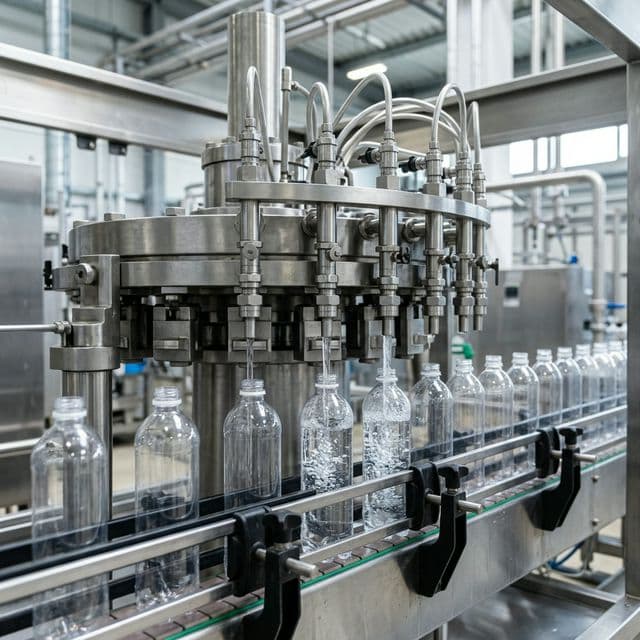
Pump Fillers configured for sauce packaging with 1,500-3,000 BPH, 50-2,500 ml, and 316L Stainless Steel contact parts.
Primary Metric
1,500-3,000 BPH
Material
Sauce
Fill Range
50-2,500 ml
Containers
Glass bottle / Glass jar
Project CTA
Share your container size, target speed, and product behavior. We will match the right equipment configuration and send a technical response.
Material guide
Need a broader view first? Review the general Sauce Filling Machine page before locking the final machine scope.
Project-fit overview
Servo Pump Filling Machine (4-Head) is a practical choice for sauce filling when buyers need 1,500-3,000 BPH output, 50-2,500 ml flexibility, and a machine platform already selected for detergent, oil, and syrup. The 4-head servo pump filler is built for plants that need broader volume flexibility across several liquid SKUs. This page narrows the discussion to how the machine behaves with sauce, not just how it performs as a generic pump fillers option.
Sauce filling needs equipment that can handle suspended solids, changing viscosity, and cleaner product cut-off than ordinary liquid packaging. Thin soy sauce can run on simpler systems, but tomato sauce, chili sauce, and cooked condiments usually perform better on piston or paste filling machines that keep the dose stable even when the product is dense. Glass bottles and jars are also common in sauce packaging, which means the line has to protect containers during indexing and capping. If the recipe is filled warm, the hopper and product path may need heating support to keep flow consistent. The right sauce filler should therefore be chosen based on recipe thickness, filling temperature, pack style, and the level of automation required downstream. In this combination, the main engineering concern is usually viscosity variation. Sauce density can change with temperature and recipe solids, so the filler must stay accurate even when flow behavior shifts. PakFill normally reviews Wide filling range helps one machine cover several liquid SKUs and Flexible product transfer method for varied bottle programs, 316L Stainless Steel compatibility, and the real bottle or jar geometry so the line can stay consistent across Glass bottle, Glass jar, and PET bottle. Condiment packaging needs less dripping and stringing at the bottle mouth to reduce cleanup and improve retail appearance.
Before final quotation, buyers should still confirm the actual formula, fill volume, container drawing, and whether the project also needs capping, labeling, or washdown planning. Servo Pump Filling Machine (4-Head) can be configured around +/-0.5%, the real downstream pace, and the packaging style, but nozzle setup, anti-drip behavior, indexing, and cleaning logic should always be matched to the actual sauce product instead of assumed from a broad machine category.
Optimization point
Servo Pump Filling Machine (4-Head) sits in the pump fillers family and is usually selected when sauce projects need equipment aligned with viscosity variation instead of a one-size-fits-all machine.
Optimization point
With 1,500-3,000 BPH throughput, 50-2,500 ml range, and +/-0.5% repeatability, the machine gives buyers a clearer starting point for balancing speed, giveaway, and container presentation.
Optimization point
PakFill normally checks 316L Stainless Steel, bottle handling, and downstream handoff so the machine fits Glass bottle, Glass jar, and PET bottle packs and future capping or labeling integration.
| Frame Material | 304 Stainless Steel |
|---|---|
| Contact Part Material | 316L Stainless Steel |
| PLC Brand | Siemens |
| Pneumatic Brand | Festo |
| Electrical Brand | Schneider |
| Power Supply | 380V / 50Hz |
| Air Pressure | 0.4-0.6 MPa |
| Production Capacity | 1,500-3,000 BPH |
| Filling Accuracy | +/-0.5% |
| Heads / Stations | 4 |
| Filling Range | 50-2,500 ml |
| Filling Principle | Servo pump filling |
| Applicable Container | bottle, jerry can, jar |
| Power Consumption | 2.6 |
| Dimensions (L x W x H) | 2,050x1,200x1,860 mm |
| Weight | 470 kg |
Process notes
Container focus
Industrial automation platform for repeatable cycle control.
Clean actuation and globally serviceable pneumatic components.
Suitable for food, cosmetic, and chemical product contact areas.
Documentation and safety configuration prepared for export projects.
Material handling priorities
Sauce density can change with temperature and recipe solids, so the filler must stay accurate even when flow behavior shifts.
Condiment packaging needs less dripping and stringing at the bottle mouth to reduce cleanup and improve retail appearance.
Many sauce lines use glass bottles or jars, which need stable indexing and gentle transfer through filling and capping.
Related Products
This magnetic pump filler is aimed at small bottle filling for essential oils, serums, and specialty liquids.
Production Capacity
2,000-4,000 BPH
Heads / Stations
6
Filling Range
30-500 ml
The 8-head peristaltic pump filling machine is positioned for smaller-volume pharmaceutical and specialty liquid projects.
Production Capacity
2,400-4,800 BPH
Heads / Stations
8
Filling Range
10-250 ml
This piston filling machine is configured for sauce and condiment products packed in glass bottles or jars.
Production Capacity
1,500-3,000 BPH
Heads / Stations
6
Filling Range
150-1,200 ml
FAQ
Yes, this model is considered for sauce projects when the real product behavior, fill volume, and package style fit the machine's range. PakFill still checks viscosity, foaming, temperature, and container control before confirming the final configuration.
The most useful inputs are the actual product sample or formula type, target fill volume, container drawing, output target, and whether the project also needs capping, labeling, or other downstream equipment.
The final answer depends on the exact container dimensions, but this page is usually relevant for Glass bottle, Glass jar, PET bottle, and Wide-mouth container. PakFill also checks whether the machine's 50-2,500 ml range and 1,500-3,000 BPH target remain realistic once the container changes.